DBSA Omaha New Hope
Depression & Bipolar Support Group, Omaha NE

Living Life in the Digital World – 10/23 meeting
This last Thursday, Miriam shared with us her presentation entitled “ Living Life in the Digital World “
Miriam shared with us her thoughts on how AI ( artificial intelligence) and the digital world may have an impact on our mental health.
She shared that AI can be positive, negative or neutral. AI is a tool that can be used in a positive way. It can simulate empathy, but it can also lack good judgment.
Some of the things that AI will tell you may be true, but it can also try to just please you rather than be accurate.
AI may have a negative impact on you, and try to make you happy. And it will say what it already knows about you. But be careful as it may also co-ruminate with you and create a false sense of empathy. It may be so much easier to use AI than to understand it.
Don’t put too much faith into what you get back from AI. Miriam shared with us that one time when she was using AI she had to ask a question fifteen different ways before she got the right answer.
Sometimes AI will have too much info, which can increase your anxiety and stress. You may start to feel manipulated or dependent on AI, which is not good if you are someone who has trouble making decisions.
AI may also reduce the human connection and can reduce your attention span. Tonight’s presentation was very informative and helpful in understanding AI just a little bit more. AI is slowly being introduced into my work environment at my job and this information will help me navigate AI a little bit better.
PTSD – 10/16 meeting
This last Thursday, Kirk shared his presentation on PTSD. ( Post traumatic stress disorder). Kirk shared a little bit of history on PTSD. It was during the First World War that what is now known as PTSD was diagnosed for the first time by a psychiatrist. It was during World War One that is was referred to as Shell Shock. Shortly after the Vietnam War it became known as PTSD.
Ten years ago a friend of Kirk’s was brutally murdered around Memorial Day. It was after this event that Kirk began to experience PTSD symptoms. Kirk talked to his Pastor at the time who suggested Kirk get some help.
Kirk started attending support groups such as DBSA and NAMI which he said were a tremendous help to him when dealing with PTSD.
So, what are some of the symptoms of PTSD?
-intrusive memories
– pacing the floor
– lots of risky behavior
– Kirk said for awhile he would move every two years
– maybe you will find yourself avoiding certain areas when driving
These are just some of the symptoms of PTSD. Kirk shared that after moving to Colorado for a short time, while living there the police notified him that they did finally find the killer of his friend.
So, if you are someone who is experiencing PTSD, like Kirk had mentioned support groups are a wonderful source to help you get through the trauma.
Or you may want to try talk therapy with a therapist if you don’t already do so.
Kirk suggested that possibly meditation or grounding techniques may also help you to cope.
I would like to thank Kirk for his bravery in sharing this very personal story.
The Truth – 10/9 meeting
This past Thursday, Don shared with us his blog entitled “ The Truth “
Don shared that his presentation for the night was all about our truth inside.
That there are facts and then there are truths. A fact is a thing that is known to be true. Facts are something that are verifiable and that ninety nine percent of society would agree on. And we all have our own truths that are un-disputable. A truth can be a perceived fact as seen through a lens, a lens formed by life experiences.
Don also spoke a little bit about living with integrity, and not settling for less than what we deserve. We have all learned about the importance of living a life of self-care. Our DBSA group meetings on Thursday nights are an important part of our self-care. Don mentioned what I thought was a very true statement. He said that loving others in our lives is a choice, but loving yourself is a responsibility. Love that statement!
And there is a reason we limit any discussions about politics or religion. It is because we are here to speak our truths about our lived experiences.
Don spoke a little bit about boundaries. Our boundaries can be in place to shield ourselves from this imperfect world. Don said parts of his boundaries are that he does not discuss politics with others and does not engage others on social media. Our nation is more divided than ever. So rather than follow the masses, learn to be your authentic self. Lying or not living your own truth only splinters your soul.
Letting Go and Forgiving – 9/25 meeting
On Thursday September 25th, I shared my most recent presentation entitled “ Letting Go and Forgiving “
Forgiveness can mean different things to each of us. In general, it’s basically a decision to let go of resentment and thoughts of revenge you may have towards someone.
Forgiveness might be hard when you feel that the person who hurt you doesn’t really deserve our forgiveness.
However, probably the most important thing to remember about forgiveness is that it will allow you to let go of that negative connection you have with them. And then at that point, you can move on and focus more on your own life. Just try and remember, “that forgiveness benefits the forgiver more than the one who’s been forgiven “.
Forgiveness does not mean you accept what happened.
Acceptance means acknowledging that you cannot control the past. If you choose to let go of your urge to control the past, it will help you take control over your future. Remember, you can accept what someone has done to you, without excusing it. Which reminds me of my favorite Maya Angelou quote;
“ I’ve learned that people will forget what you said, people will forget what you did, but people will never forget how you made them feel. “
Maybe we need to try and look at Forgiveness not as a decision, but more like an attitude, or a habit.
Learn to embrace how unique our own road to forgiveness truly is.
Write a letter…if you really want to avoid meeting in person with someone person you’ve forgiven, maybe writing a letter to that person might be a better way to show how you’re feeling. With a letter you get to share how you are feeling, without being interrupted. It gives you the chance to say what you need to say. A letter can be a great way to offer forgiveness to someone who you don’t want to resume contact with. You can even write the letter without sending it, and send it later or not at all. Just the act of writing the letter will help you feel better.
Something very important to remember; If you let resentment or bitterness control your life, you only give the one who hurt you power. Never give them this. Never give them the power!
Be kind to yourself..if you tend to criticize yourself for not being able to let go of a hurtful situation, then you need to try and show yourself some kindness and more compassion. As Miriam always says, treat yourself as you would treat a friend. Show yourself some kindness when you are hurt.
Most importantly, allow peace to enter your life once you have forgiven someone.
I Believe – 9/11 meeting
On Thursday September 11, Don shared with us his presentation entitled “ I Believe “
Don began by sharing that we all have our own beliefs. The truths that Don believes may not be your own beliefs, but these beliefs are true according to Don. We all have our own sets of values and beliefs.
Knowing and living your own beliefs may be difficult, but it is a way to your true self. And an alignment of your own beliefs will help you get through many of life’s storms.
Don also had us participate in an exercise about finding your authentic self. He handed out a sheet with a title of “ Fast Values Exercise “ at the top.
There were approximately 93 choices on this list, and our job was to choose and circle all of the words that most appropriately described us.
And then we had to choose our top five words that described us best.
My chosen top five words were Family, knowledge, Spirituality, mindfulness, and thoughtfulness.
I love presentations such as this, that really make us stop and think about what we value and to also learn more about ourselves. And most importantly to remind ourselves of the many gifts we each have that we can also share with others.
Family Events – 9/4 meeting
This past Thursday, our fearless leader Miriam shared with us her presentation entitled “ Family Events “
She began by asking us to share a word that would describe how you feel at family events. Some of the words shared were hopeful, scared, and anxious.
Or maybe we even have bad memories of the Holidays last year.
Miriam shared that she visited her Mom last Summer in July. She was a little anxious about visiting her Mom and family, but to her surprise everyone got along and it all worked out. So, when we have these visits with our families, what if it all works out?
Miriam gave us different ways that we can have a better family event. There are ways that you can prepare in advance for your defense.
1) Identify your triggers, and prepare for them.
2) Set realistic expectations. Find little moments of joy that can supersede the negative things.
3) Establish and communicate boundaries.
4) Plan a self-care strategy for when you start to feel anxious.
5) Arrange an exit strategy for your departure. Remember it’s okay to walk away from people who are not treating you well.
6) Find an ally. Find someone who you do like and have a good conversation.
7) Use effective communication.
8) Practice active listening.
9) Try to focus on the moments of joy.
10) Reflect on what went well and what did not go well.
And finally, practice self-compassion and be kind to yourself.
Miriam gave us great helpful tips and advice for when we get together with our families. I for one will try and use some of this information the next time I am with my family!
Don is now officially certifiable!
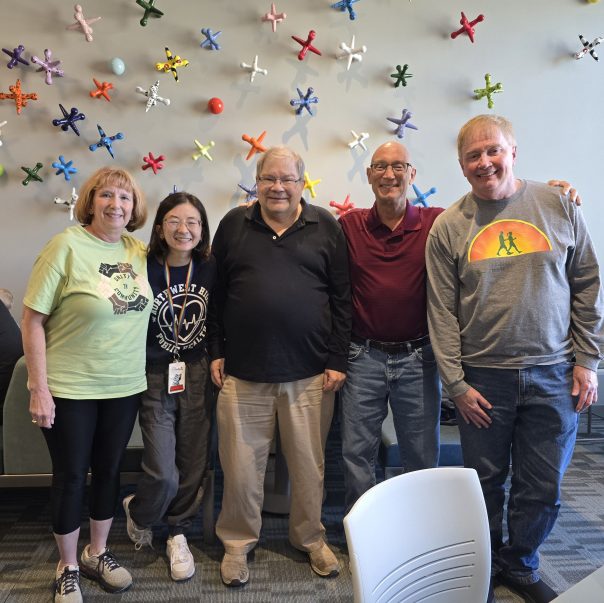
Yesterday, Don graduated from the Nebraska State Certified Peer Support Specialist training course at Community Alliance! In attendance for the graduation ceremony were several past and present DBSA board members. Not on to the state certification test and hopefully in the next few months a new career direction!
Narcan – 8/28 meeting
This past Thursday, we had a guest speaker. Jennifer from Douglas County Mental Health shared with us her presentation on the proper use of Narcan.
Narcan is a one use nasal spray that is used in the event of a drug overdose.
She shared that not only do people overdose on illegal drugs, but they can also overdose on prescription drugs.
Jennifer advised that Opioids, which can be either prescription pain killers or illegal drugs, are a common source of an overdose.
One way to identify an overdose is if the person seems too relaxed. Too many Opioids can cause your body to relax too much.
She also shared an acronym that will help even more to identify an overdose.
A- is the person alert? If they are talking, then they’re alert.
B- Breathing? Is their breathing decreased, is there less breathing or an absence of breathing?
C- Color of lips or fingertips. Is there a change in their skin tone?
Narcan is only one dose, and will normally assist with breathing. However after 3-4 minutes, if there is no response, you can use a second dose if needed.
If you are dealing with someone who is experiencing an overdose, first and foremost it’s important to call 911. There is no limit on the age of someone who can overdose. Sixty percent of overdoses happen in residential settings.
When calling 911 for someone who has overdosed, make sure and be aware of your surroundings, noting the nearest entrance and exit. This will be important for any emergency services that come to assist. Jennifer also talked briefly about Nebraska’s Good Samaritan Law, which encourages people to call 911 if someone is experiencing an overdose.
The Good Samaritan Law , basically allows for one person to provide emergency care at the scene of an emergency, and the person assisting is relieved of any civil liability. Jennifer provided a very informative, and helpful presentation for us and did an amazing job.
Thank you, Jennifer!
You can find a full definition of Nebraska’s Good Samaritan law on Nebraska’s Legislature website at:
https://nebraskalegislature.gov/laws/statutes.php?statute=25-21,186
Freedom – 8-14 meeting
On Thursday the 14th of August, Carolyn shared with us her presentation entitled “ Freedom”
She opened by singing one of her favorite songs that reminds her of freedom. “ Country Roads “ by John Denver.
So when it comes to freedom, what does it mean to you? Freedom has different meanings for different people. Freedom doesn’t just mean independence. It can mean being free of control from others who are trying to control our lives.
We want to be able to move freely and not feel like we are in someone else’s clutch all the time. Carolyn shared that this is exactly where she is right now, feeling like she is in someone else’s grip. She said it’s been going on for a long time. And it has felt like self-imprisonment to her since she hasn’t done anything about it.
But she feels more determined than ever before to get released from this hold on her. How about you? Do you have something that is holding you in a tight grip? So what exactly is it that has a grip on you? And what exactly is freedom to you? Can you define it?
Remember you have the freedom of your mind. Do you feel any constraints? Physical, mental or emotional? Feeling free and being free can be two different things.
Are you free if you feel obliged to help someone? There is such a thing as time freedom. Time freedom is the ability to choose what you want to do with your time. It’s doing what you love doing most. Now! Not later! You need to focus more on your well being and happiness. Maybe do something crazy that you always wanted to do.
So, is total freedom good for you? Not if you lose your self respect. We all need a certain level of control and responsibility. We have the freedom to acquire knowledge, or to get a job.
We can use the lack of freedom that many of us feel as motivation to push us further. Freedom isn’t always happiness, but your actions, the creating, and helping others in rough spots so they can improve their lives. This can be very satisfying to most .
Freedom is something most people take pride in. Is anyone completely free?
Can true freedom exist without limits or rules? Real freedom is when you can decide for yourself to do what you think is right. The greatest freedom you can positively choose, is to say no and mean it. But we can’t always get what we want in life. And we can’t always get what we need either. But sometimes we do and it works out okay.
So, the bottom line is think before you act. Be thankful for the freedoms you do have and for the gift of choices you get to set your mind to.
Starting to Rebuild Momentum – 8/7 meeting
This last Thursday, Justin shared with us his latest presentation entitled “ Starting to Rebuild Momentum “
Justin began by sharing that when we are wanting to rebuild momentum in our lives, we will want to start from a specific point. When you are starting to rebuild momentum, it may feel like you are starting all over again. However just remember that every time you do start over, that you know even more than you did before.
So what is momentum? It can be something that is moving that has usually started with a small action. If there is something in your life upon which you would like to build more momentum, just remember to write it down. If you write it down and tell someone who cares about you what you are doing, it’s more likely to happen.
Make a list the of pro’s and con’s. This can be a helpful way to get yourself motivated and organized. Consider a schedule you know you can commit to. You will need the discipline to do whatever it is you decide to do.
Meditation can be helpful as well, but you need to schedule the time for meditation. This could help quiet your mind.
The motivation to begin building momentum is an internal state that effects our choices. And the commitment will keep you obligated to that choice. Inspiration can be like a spark that will help you think creatively. Remember waiting for inspiration and motivation may not come easy. You won’t know how far you can go if you never start.
 DBSA Omaha New Hope