DBSA Omaha New Hope
Depression & Bipolar Support Group, Omaha NE

Gratitude – 11/3 meeting
One of the great traditions that many families have at Thanksgiving is going around the table and each person tells what they are thankful for.
That is exactly the discussion Don led us through last night.
First we talked about how expressing gratitude helps us both physically and mentally.
We started talking about the “Big Picture” and what major things in life we are grateful for. We opened up the room and everyone contributed. Some of the topics that were brought up were:
- Your family
- Close friends
- Good health
- Your home
- Your job
- Healthy food
- Your education
- Your pets
- A good night’s sleep
- 10.Having enough money
- Weekends
- 12.Art
- 13.Teachers
- 14.Modern healthcare
- 15.Music
That was big picture, but we also talked about small things that are part of our everyday life. Some of the topics included were:
- Indoor plumbing
- Food delivery services
- Wifi
- Netflix
- Fuzzy Socks
- Deodorant
- The ability to Google any question
- Toilet Paper
- Duct Tape
- 10.Good hair days
- Bacon
- 12.Fortune cookies with perfectly timed fortunes
- 13.Cat videos
- 14.GPS
- 15.Auto save
- 16.Spellcheck
- 17.Chapstick
That was followed by a discussion of what about Thanksgiving itself we are grateful for?
- Holidays with family (or friends)
- A good meal
- A comfy couch or chair
- Your favorite Thanksgiving side dish
- Uncontrollable laughter
- Pie
- Seeing old friends
- Grandparents
- Not being the turkey
We finished with talking about our group. One person after another contributed what our group has meant to their lives. It was an inspiring and heartfelt end to a great meeting!
The Masks We Wear – 10/27 meeting
Last Thursday October 27th, we were treated to Don’s latest presentation, with a Halloween appropriate title “ The Masks we Wear”
Don began by sharing that Halloween’s origin began as an ancient Celtic holiday , with the wearing of masks. He also reflected that as recently as a year ago, we were all wearing masks due to the pandemic, which gave us a place to hide. Now things are much different.
But many of us do wear masks every day, both intentionally and unintentionally. Lately Don has felt like he has been putting his armor on, and wearing a mask more often.
So what is a mask? A traditional definition is ; a covering used to protect ourselves. Masks can be emotional. They may be a false front, as sometimes we build false fronts and hide behind them to get through the day. These emotional masks can protect us from the cruelty of the world.
Types of Masks…
1) Identity mask…this mask is used to hide who we are from others. This mask can also be a better one to use for conflict avoidance, or for survival. When wearing this mask, you may find that the real you will try to come out.
2) Emotional mask….this mask will usually hide what you are feeling. This may be a mask that you started wearing, if you grew up in a family that would hide their feelings. Don related that his wife Miriam grew up in a very talkative family, whereas Don’s family was the very opposite. The emotional mask can help you get through difficult situations. If you happen to be going through something difficult, sometimes you need to let the emotions flow. It is possible to overuse an emotional mask. Sometimes we need to process our emotions to get to inner peace.
3) Situational mask…..different situations may require a different mask. Such as giving a presentation at our Thursday night group. Or when you are meeting a new person for the first time. It’s important to assess the situation you’re in so you are wearing the appropriate mask.
What are some things that all masks have in common?
– all of these masks serve a function
– they help protect you from ill-intentioned people
– wearing a mask is one way of setting boundaries. Sometimes it can be healthy to keep new people you meet at an arm’s length until you get to know them.
There are also some reasons to shed your mask;
1) shedding your mask will help you to live up to your potential
2) we often mask special parts of us that we should share with others
3) relief..it can be exhausting to wear a mask all the time. You may not be living an authentic life if you’re always wearing a mask
4) healing…when wearing a mask, we carve a piece of ourselves out. And we can’t be healed in life unless we feel all the feels and never hold back.
How do we remove our masks? If we remove our masks, you may get to know yourself better. We need to be willing to take risks and live our lives fully. And don’t pull your mask partially off and let the world scare you.
Remember being maskless requires courage, but will ultimately reveal the person we truly are.
Boundries – 10/13 meeting
Last Thursday October 13th, we were treated to Miriam’s recent presentation entitled “ Boundaries “
Miriam began by sharing how she has recently had to set some new boundaries with her Son. Her Son lives in a different state, and has gone back and forth about possibly moving back to to be close to her, as well as being indecisive about his work life. She shared that she feels renewed after setting boundaries with her Son. Sometimes in life you even have to set some boundaries with family members.
She also shared that there are usually three different areas where you should set boundaries. Those three are work, at home, and with yourself.
Sometimes when setting boundaries, you will learn to separate your “stuff” from other “stuff “. When you start to set some boundaries in your life, there will be some signs that your boundaries may be too rigid. Some symptoms of boundaries that are too rigid may be that you don’t have any close relationships or you may be isolating and staying home too much.
In a relationship, ( this includes any relationship with others) you will want to set healthy boundaries, which may mean you may spend time doing things you don’t necessarily want to do. This would be part of a healthy relationship.
There are also three different types of boundaries, which are emotional, mental and physical. Emotional boundaries are about your feelings and your ability to express those emotions. Mental boundaries are your thoughts or beliefs, and are about sharing your emotions with others. And physical boundaries are the limits you set regarding your body.
Your boundaries are also based on how you are feeling at the time. And boundaries can also be about saying no and yes. Once your boundaries are set, you will need to communicate your boundaries!
Ways to set your boundaries:
– Setting your boundaries have a lot to do with self-esteem. We need to evaluate what we value.
– You need to be able to state your boundaries
– Decide due to your core values, where your boundaries are set.
When setting your boundaries, accept you can’t change others, only yourself.
Setting boundaries are all about honoring your own needs. Once you’ve decided your boundaries, you need to let your behavior speak for your boundaries. The most important part of setting your boundaries is learning to communicate your boundaries. You need to be comfortable and state what your boundaries are. Just remember you matter, and your opinions matter. Setting boundaries is not easy, but it can be very rewarding.
Trusting your Intuition – 10/6 meeting
Last Thursday we were treated to Steve’s most recent presentation, entitled “Trusting your Intuition “
Steve began by sharing ideas as to what intuition actually is. Some people may call it a hunch, or a gut feeling, or maybe even refer to it as your instinct.
Some think that trusting your intuition can be the best choice in some situations.
He shared with us a few signs of gut feelings:
– you may have tension in your body
– “ butterflies in your stomach “
– a sinking sensation in your stomach
– sweaty palms or feet
– memories of a certain person or situation
– a feeling of peace after making a hard decision
You may look at intuition as being based on your awareness of a certain situation. Intuition can also be an awareness or wisdom about something that you just can’t explain.
There are a few signs where your intuition is on target:
1) when you have a worry or concern that you are dealing with, don’t be surprised if you start having vivid dreams. This could be a sign that your subconscious is working through different scenarios looking for a solution.
2) Nagging thoughts…..if your mind keeps on playing the same situation over and over again in your head, don’t ignore it. This could be your intuition trying to tell you something. These thoughts may be related to any areas of your life, so allow time to stop and reflect on this.
3) you’re able to pick up on the energy of others; if you’re able to notice someone else’s energy, and it feels like a positive or negative vibe to you, then that could be your intuition stepping in.
4) you feel like you know about things before they happen. Have you ever felt like you knew what someone was going to say, even before they say it? That could be your genuine understanding of people, and could also be your intuition at play.
5) at the right place at the right time…if you’re feeling this way, then you are probably listening to your intuitive inner voice guiding you in the right direction. Stick with your gut feeling rather than listening to your more logical voice.
6) How do you feel when you’re thinking of someone, and all of a sudden either they call or text you? Or you may accidentally run into that person. This could easily be your intuition at work again, and you sensed this would happen.
Gut feelings ( intuition) vs. Anxiety
Steve also shared with us the difference between intuition vs. anxiety.
Gut feelings…usually will lead you more clearly. Gut feelings will usually come up in specific situations or about certain people in your life.
Anxiety…..usually will focus on the future and will be less clear. And you might find yourself worrying about things that you usually can’t control.
Gut feelings…normally will pass once you’ve made that decision and you will feel more calm about it.
Anxiety…..lingers and may make you feel like you’re on constant alert. You may resolve one concern, and then immediately start worrying about something else.
Steve also shared that there are important decisions and times when you really should trust your intuition.
1) when something feels wrong with your body…if you have a gut feeling about your body, that something is off or not quite right, listen to it. Maybe go get a physical exam to be sure. Physical symptoms can also happen when you’re around someone who physically drains your energy. Or maybe you’re in a certain situation that drains your energy. That would be a time not to ignore your intuition. If you stay in a situation that drains your energy, it may end up just causing more anxiety or depression. It may be time to end that relationship.
2) you feel that you are in danger…remember that your gut instincts will reveal what your subconscious may already know. If you meet someone new, and you initially don’t trust them, even if it turns out to be wrong, it might be worth listening to your intuition.
3) “ this is it” . When you run across that special someone, or even when making that important decision, like buying a house. If your intuition tells you that you have found someone or something that is right for you, that usually makes the decision pretty easy. This is probably one time where you should really use your “ gut instinct “.
This was a really fascinating topic shared by Steve, giving us so much to think about!
Vala’s – 10/3
Our biggest Friendship project event so far will be at Vala’s pumpkin patch on Thursday 10/3!
This event is only for those that signed up at our meetings over the last month.
Here is how it works….(Vala’s changed their proceedure this year and we found out about it Tuesday.
- Go to Vala’s at 12102 S 180th St, Gretna. You can go anytime after 1:30 and before 7:30. Our campfire event will be 5pm to 9pm but your free ticket is good for all day!
- Look for Caroline near the entrance from 1:30 to 5:00 and Miriam from 5:00 to 7:30 to pick up your tickets.
- Feel free to wander. Here is a link to a map. We are at campfire site 26A for our event.
- To get to campfire site 26A from the front entrance, turn right. This is what you will see.

Go down the hill. The path will curve left.
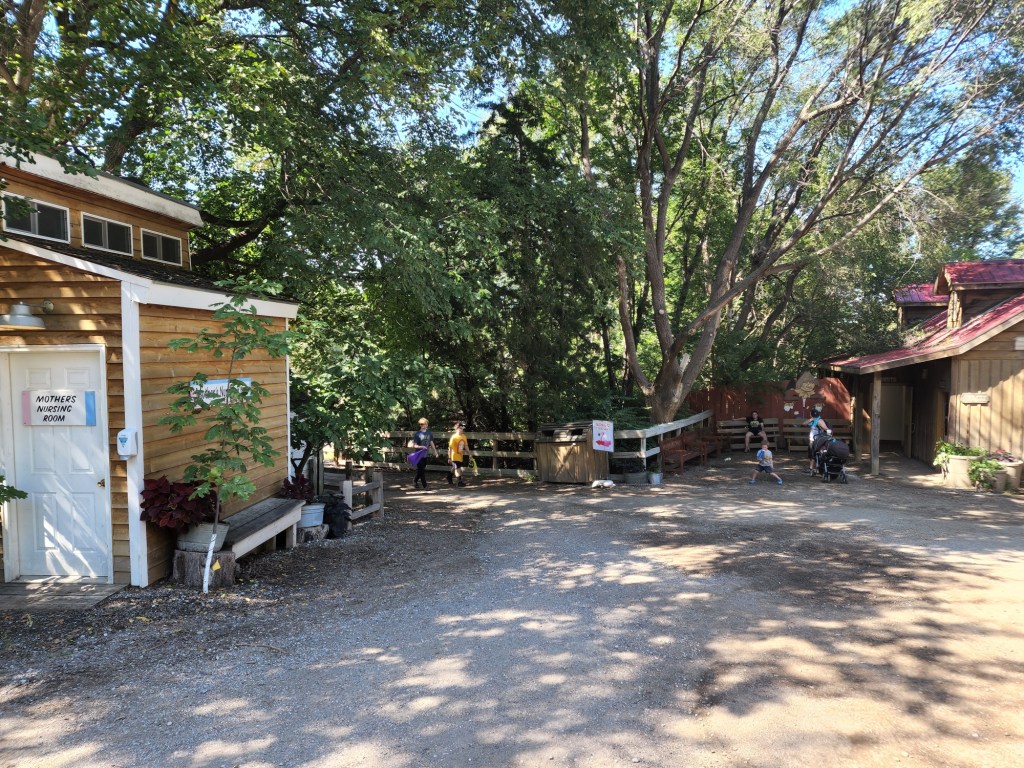
Head for the American Flag.

At the flag, go strait towards the red roofed building.

Go around the left side of the red roofed building.
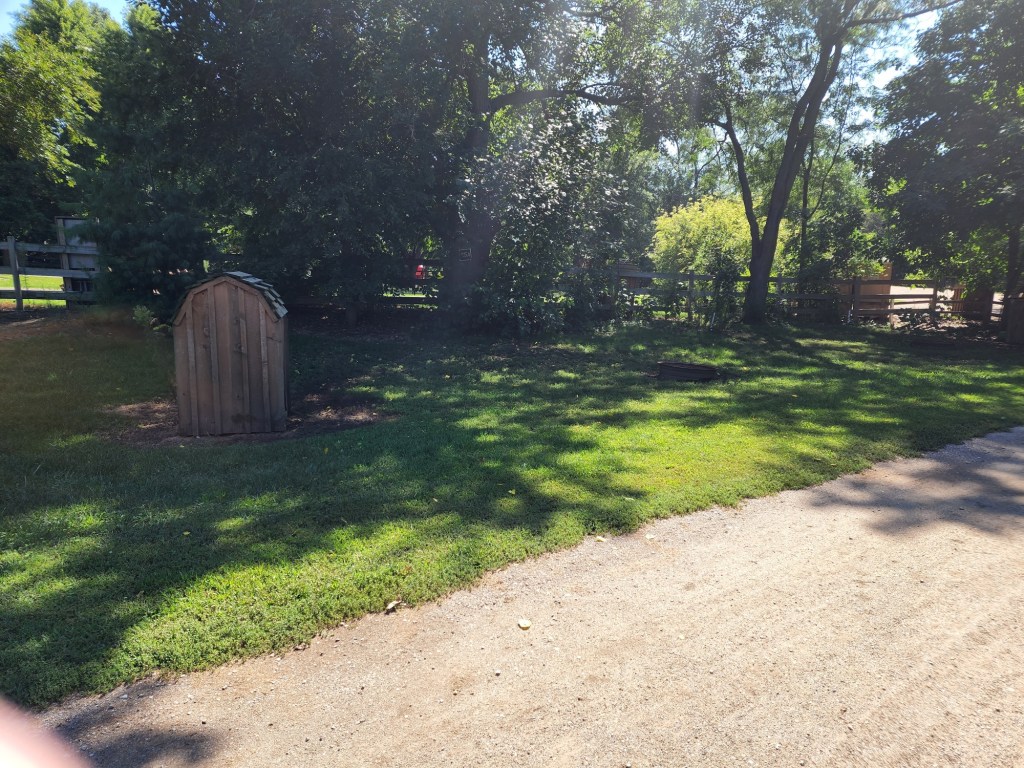
Just a bit down the path, site 26A will be ahead of you across the path, once you have cleared the red roof building.
Some of us will be hanging out there during the entire event but what you really need to know is we are breaking out the s’mores at 7:30!
Have fun and see you Wednesday!!!!!
Managing Change – 9/29 meeting
Our most recent DBSA meeting was very memorable, with Don presenting the evening’s topic “ Managing Change “. After brief introductions were made from around the room, Don went on to dive deep into managing change, and how greatly change does affect our daily lives. Don described our daily experience as living in a “ simmering cauldron of change” . I liked that description!
We all realize that most changes are out of our control, especially when it comes to external changes. For example, with the recent experience we all had with Covid over the last year and a half, our daily schedules had changed dramatically. We can however control how we react to change.
Don recommend that we flip the script, on how we handle change. He mentioned we should re-focus, reflect, and also focus on our self-care. Don suggested that when change happens, it’s time to set some boundaries, and control your reactions and learn to accept change all around us. It’s important to realize not every change affects you, and to work the problems that are important to you.
Don advised in regards to change #1) think it over before reacting #2) acknowledge feelings #3) take a breath #4) take actions when you can and #5) let it go
Community Resources – 9/22 meeting
Last Thursday we were treated to Abigail’s first presentation with us, entitled “Community Resources “
Abigail began by sharing that she wanted all who were present to leave with more knowledge of the mental health resources that are available in the Omaha area. She shared that Omaha does have many mental health resources available that will help you without the need to be hospitalized.
Some of those options are listed below;
988, which is a suicide and crisis hotline. This hotline was started in 2014 by a senator in Utah, who felt we needed to recognize mental health emergencies as true health emergencies. When using 988, about 90 percent of the people that call in will receive a call back the next day. The folks at 988 are able to activate a mobile crisis response team. This team consists of therapists who are trained as co-responders. These co-responders will go to the home and try and de-escalate the situation. These individuals can also offer post crisis care, and will also connect you with 90 days of community support.
Safe Harbor…Safe Harbor is a peer run crisis intervention center in Omaha, at 414 South 25th Ave. Safe Harbor is the only entirely peer run support center in Omaha, and run by people who have experienced mental illness. You can stay up to 24 hours in this facility, providing they have the support staff on hand. They also operate a 24/7 warmline you can call at 402-715-4226
( PES) Psychiatric Emergency Services Unit at UNMC…
4350 Dewey Ave Level 1 , 402-559-6637
This is an psychiatric emergency room just for mental health, and is meant to give people a place to stabilize and connect with care and referrals. Their goal here is also to avoid an inpatient hospital stay, and help patients de-escalate and become safe.
Community Alliance…
This is a community based mental health care agency, that provides the largest choice of mental health care services in Omaha. This includes a mental health clinic, and several other programs. A wait to see a psychiatrist here is typically about 4-5 weeks.
You can call 402-341-5128, and ask for the rapid response team.
At the end of Abigail’s presentation, she asked us to show by a raise of hands if everyone had taken away at least one thing from her presentation. I definitely raised my hand. I learned that there are many more mental healthcare options out there for people in the Omaha area than I realized.
And that’s a positive thing!
Healing Your Inner Child – 9/15 meeting
Last Thursday we were treated to Haley’s latest presentation entitled “Healing Your Inner Child”
Haley began by relating how it is possible that any trauma from your childhood can contribute to PTSD. When working on dealing with your inner child, you first need to find and know your inner child.
Your inner child is part of your sub-conscious that picks up on memories from the past and how you grew up. If you’ve had emotional or physical trauma, it can make even the smallest things you are dealing with seem huge. Unhealthy decisions are sometimes made if you are influenced by trauma. Sometimes if you have experienced self-sabotage in your past relationships, it can be linked to trauma as well. Even though you may not realize it, your inner child is always there and ready to come out and play. When this happens, sometimes you may experience avoidance. Or if someone asks how you are doing, you are always saying you’re fine, even though that may not be true.
There are many ways we can connect with our inner child, and following are a few examples;
1) keep your mind open
2) remember finding your inner child can affect your present and future
3) you can look to children for guidance
4) try watching movies or television from your childhood
5) look at old photos to bring you back to your childhood
6) try visualization exercises, and try to visualize yourself living as a child again
7) do something creative, such as drawing or painting
8) spend time doing something you used to do as a child
9) talk to your inner child by journaling, or even talk to yourself in the mirror
10) try free writing
11) learn to forgive yourself for something you’re aware of now, but maybe weren’t aware of as a child
12) try meditation
Remember that trying to process your inner child can be heavy-duty, but also may be rewarding. You’ll need to learn to re-parent your inner child, as it may be time to move on and finally forgive yourself.
Great job presenting Haley!
Talking to Me, Myself, and I – 9/8 meeting
Last Thursday we were treated to Kristina’s fascinating presentation entitled “ Talking to Me, Myself, and I. “
Kristina began by sharing with us some of her thoughts on self-talk, or also known as our inner dialogue. She shared usually on any given day we may feel these nagging voices telling us what we are doing wrong, and tearing us down.
She also shared with us a definition of self-talk. Self-talk is the conversations that happen within our minds during all waking hours of the day.
There are also two different forms of internal dialogue, positive and negative.
Each of these have very different effects on our moods. When you learn to practice positive self-talk, you can feel a sense of joy, and have excitement for life. However if you allow your negative self-talk to take over, it may lead you down a path of depression and fear. Negative self-talk can be toxic, and it may cloud your mind with a low sense of value.
Some of the side effects of negative talk may be depression, anxiety, and low self-confidence. In addition, Catastrophizing, personalizing, or making external events all about you can be symptoms related to negative self-talk.
Many believe that having the right skills you can practice to encourage positive self-talk may actually help you to practice positive self-talk more often.
Sometimes just subtle shifts in your inner dialogue can have positive effects.
Kristina did share with us some positive self-talk techniques. If you ever feel yourself getting caught up in negative self-talk, try some of the following options;
1) develop a profound sense of purpose…having a meaningful sense of purpose can help you get through difficult times.
2) Try and remove negative people and situations from your life…learn to keep your inner circle supportive and loving
3) Practice Gratitude…learning to express thanks for the good things you have in your life can help.
4) Learn to develop your sense of humor…..find something that will make you smile. It’s heard to be in a negative frame of mind when you are laughing out loud.
Also, listen to what you’re saying to yourself. Challenge your own self-talk if you feel it’s it’s getting a little too negative. Is there any evidence for what you may be thinking? Ask yourself the question, can I do anything to change the way I am thinking? Try making a note in a journal or even on your phone on what you are thinking. Try and change your self-talk. Make a list of the positive things about yourself.
Or you can start small. Start every day with stating just a few positive words, which will send a positive message to yourself.
It just may turn your day into a positive one all day long!
Life on the Edge – 9/1 meeting
Last Thursday we were treated to Don’s most recent presentation entitled “ Life on the Edge “.
Don began by sharing with us that the last few weeks have been more difficult for him, much more than normal. Sometimes you feel it coming, and you start to feel yourself looking over the edge. You start to become easily annoyed, and you might strike out at others more easily than usual. Your blood pressure and heart rate may start to rise, and you just don’t feel yourself. Don explained that he wanted to look at things a little different, especially when it comes to life on the edge. Rather than just looking at the negatives, Don told us there are positive aspects of life on the edge.
First though, it is important to examine how you got there, and realize that as this type of anxiety is a little different than clinical anxiety.
This type of pressure or anxiety is event driven, and it’s usually a caused by a stressor that may take you from your baseline anxiety to other levels. Don shared that right now he is truly living on the edge. His Son was recently fired from his job. He admits that every marriage has its bumps, and he shared his wife’s current stress in her life that trickles down to him, as he feels like he is the family sponge. And for better or worse, at work he has a truly trusting boss, who likes the work Don achieves. After working on designs for the last two years, money has been spent and things are coming to life. Will it all work as well as Don thinks? Also, Don talked about his physical health being a push every day, and his fatigue, anxiety and troubled heart have him concerned.
However, Don pointed out, the good side of Don’s living on the edge, is that his technical and creative sides are being challenged every day, which for him is the upside. He feels alive and is really working through some big projects. Life on the edge is truly a two edged sword.
With every challenge and stressor, the only solution is to get over to the other side. Don realizes that sometime soon his projects at work will eventually get built, his son’s situation will stabilize, and his wife’s work project will be over, and his stressors will lessen.
But if you are living on the edge, you have to choose an edge you can live with. There are some things you can do to help you reduce your stressors;
1) Reduce stimulants, such as caffeine, alcohol and especially social media.
– try and focus on doing one thing at a time
– remember to keep your mind engaged .
2) Get plenty of sleep, and keep your routine. If you normally go to bed at 10pm every night, make sure you stick to this routine.
3) Name your stressors. When you know what they are, you can work on them. And if you can’t name your anxiety, then start journaling to see if that will help you define it.
4) Relaxation…..is a skill you can learn over time. Try exercise, breathing exercises, or if you’re artistic, just getting lost in your art. Try writing, and make sure you take breaks in your day. Try going outside and watching the birds. Or maybe try meditation.
5) Accept your anxiety, and accept that it’s okay. Choose to live with your anxiety.
Don shared a quick quote with us :“ When we let anxiety run it’s course, and live in the moment, it soon will pass. “
Also remember, the thoughts you resist, persist. And don’t criticize yourself for your anxiety.
Try and do a reality check on your anxiety, once you have named it. There will always be other stressors in our lives, and you may not always have the bandwidth to deal with it.
The bottom line is it is OK not to deal with every problem you have at once. Prioritize and only work on what you can achieve without adversely effecting your mental health. Be good to yourself. When you are good to yourself, you are actually drawing a boundary around yourself, which in turn will always help you with your mental health!
 DBSA Omaha New Hope